
Table of contents
The compliance challenge in occupational health and safety
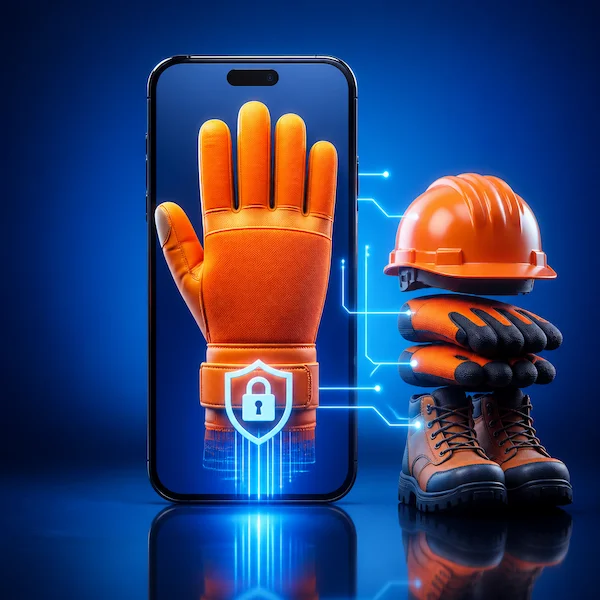
In human resources and workplace safety, occupational health and safety (OHS) legislation is strict: employers must inform workers about the risks of their role, provide safety regulations and deliver the necessary Personal Protective Equipment (PPE).
The real challenge is not only meeting this obligation, but being able to prove it before the Labour Inspectorate or in court. In the event of a workplace accident, paper delivery receipts signed by hand are often lost, damaged or misplaced at worksites.
Requiring remote workers, factory operators or site staff to travel to head office to sign receipt of safety boots, a helmet or an updated prevention plan creates critical operational inefficiency and delays their start on the job.
Advanced signature from mobile: security without slowing operations
Digitising OHS through advanced electronic signature solves this bottleneck with a zero-friction approach. A process that used to take days is completed in seconds from the operator’s own smartphone.
Implementing this digital flow delivers three key operational and institutional advantages:
1. Immediate signing on site or on the shop floor (BYOD)
Thanks to the Bring Your Own Device (BYOD) standard, the warehouse manager or OHS technician can hand over PPE and complete the digital form from a tablet. The worker only needs to scan a QR code with their own mobile phone or click an SMS link to review the document and sign with a finger on the screen. No apps to install and no corporate portal passwords to remember.
2. Mass automation of safety regulations
When a safety protocol affecting hundreds of employees is updated, Bulk Send functionality lets you send the document to the entire workforce at once. Each worker receives a personalised notification and applies their advanced signature using a one-time PIN (OTP) sent to their phone. The HR department can monitor in real time who has signed and who still has reading pending.
3. Instant internal audits and risk control
Centralising these flows through an API connected to HR software or the OHS management system eliminates physical filing. In a surprise labour inspection, the office does not need to search through paper folders: entering the employee’s ID number is enough to download their full history of signed PPE receipts and training instantly.
Legal protection in workplace accident claims
In a civil or criminal liability claim following a workplace accident, a scanned document or a simple web tick box are not valid discharge evidence.
Advanced electronic signature collects essential technical metadata from the signing process (IP address, device data, timestamping). All this information is packaged in an Evidence Document or Audit Trail sealed cryptographically, guaranteeing that the regulation or PPE receipt has not been altered since the worker signed it. It is the only technical evidence admitted with full guarantees in court.
Frequently asked questions (FAQs)
Does mobile digital signature fully replace traditional handwritten signature in OHS? Yes, completely. The European eIDAS Regulation gives advanced electronic signature the same legal validity and admissibility in court as paper signature, and it is even more secure thanks to the digital trail it generates.
What if an operator signs PPE receipt but claims the technical document was illegible? The process Audit Trail links the worker’s signature unambiguously to the hash function (digital fingerprint) of the exact PDF file shown on screen. This prevents the employee from arguing they signed a blank document or different text.
Can it be used for temporary workers or external subcontractors? Yes, it is ideal for these cases. With no prior registration or complex setup required, safety regulations and site access for external contractors can be processed the moment they arrive on site.
Conclusion
Occupational risk prevention is not only a matter of physical safety, but also of legal security for the company. Keeping PPE management and prevention plans on paper exposes the business to severe financial penalties and criminal liability in the event of an accident.
Digitising OHS document signing through workers’ mobile phones unifies legal compliance with the agility required in day-to-day operations. The company gains full, centralised control of its evidence, while employees access protective equipment without delays or unnecessary bureaucracy.
Ready to get started?
Contact us to share your business project or register now to start trying our services today